
WATER FOR INJECTION SYSTEMS
Water for Injection: at the core of drugs manufacturing
Water is the most widely used raw material in pharmaceutical manufacturing. It acts as a solvent, an excipient and a cleaning medium in vaccines, parenteral solutions, ophthalmic and topical preparations and many other dosage forms. The required quality depends on the product and is defined by pharmacopoeial monographs and regulatory guidelines. These pages summarize the requirements for Water for Injection (WFI) and other pharmaceutical grade waters, the technologies used to produce them and the criteria for choosing among them, with particular attention to intravenous fluids and parenteral solutions. They are intended for process engineers, QA and validation staff, technical offices and students.
Definition and regulatory framework
A water that meets the requirements of a pharmacopoeial monograph is called a compendial water. WFI is the compendial water used as an excipient in parenteral preparations and wherever bacterial endotoxins must be controlled: it meets the Purified Water (PW) requirements, with the addition of the bacterial endotoxin test. The main references are the European Pharmacopoeia (Ph. Eur.), the United States Pharmacopeia (USP–NF) and the Japanese Pharmacopoeia (JP). National pharmacopoeias can differ in terminology, analytical methods and provisions on production systems.
The pages of this site address, among other topics: the definition of WFI in the main pharmacopoeias; the production methods accepted by each of them; the differences between sterile and bacteriostatic WFI; the criteria for choosing between vapor compression and multiple effect distillation; and the use of reverse osmosis with ultrafiltration to obtain “cold” WFI.
See What is Water for Injection? for specifications and a summary of international pharmacopoeias and regulatory references.
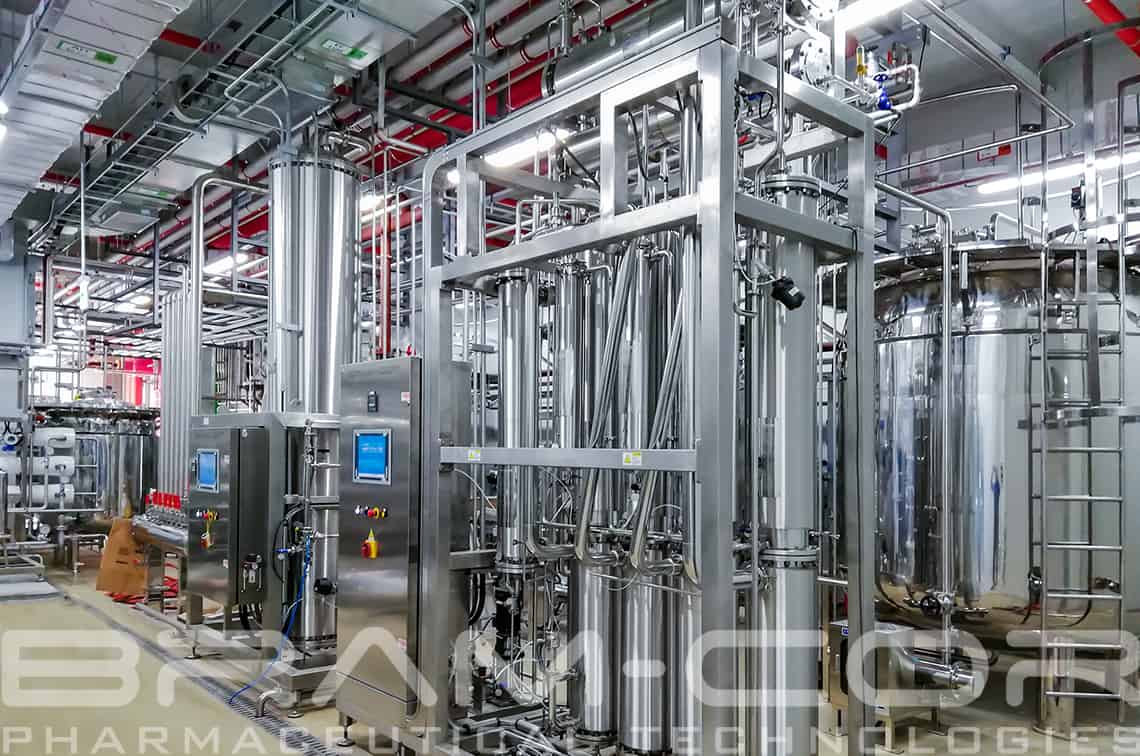
Production of WFI. Equipment and technologies.
WFI is produced by distillation or by a purification process equivalent to distillation. USP has admitted the second route since its 2004 revision. The Ph. Eur. monograph for Water for Injections (0169) was revised in 2016 to allow, from April 2017, a purification process equivalent to distillation, such as reverse osmosis coupled with appropriate techniques (for example ultrafiltration), with prior notification to the competent authority. Other pharmacopoeias may not be aligned on this point [verificare, ad esempio ChP e FB].
The two routes rely on different protection principles. In distillation, the liquid-to-vapor phase change acts as a physical barrier against endotoxins and microorganisms. In membrane-based systems there is no phase change, so protection depends on a validated multi-barrier design, continuous monitoring of membrane integrity and control of biofilm and microbial load, including sanitization of the distribution loops. The choice depends on feed water quality, available utilities, capacity, sanitization strategy and local regulatory requirements.
Overview page on all methods: Methods to produce Water for Injection

How the generators produce WFI
Technology pages:
- Vapor Compression Distillation process
- Multiple Effect Distillation process
- Membrane-based systems (RO+UF)
- A comparison of MED and VCD lists the selection criteria.
WFI equipment is made in compliance with International Good Manufacturing Practices (cGMP). Visit our main web site (bram-cor.com) to discover BRAM-COR's expertise in many types of pharmaceutical equipment and technologies.
References
- "Guideline on the quality of water for pharmaceutical use" from EMA (European Medicines Agency) (EMA/CHMP/CVMP/QWP/496873/2018).
- EMA. Questions and answers on production of water for injections by non-distillation methods – reverse osmosis and biofilms and control strategies (2016).
- EDQM. European Pharmacopoeia, monograph Water for injections (0169).
- USP–NF. General Chapter ⟨1231⟩ Water for Pharmaceutical Purposes
More references: pharmacopoeias and regulatory references
WFI Generation for large-scale vaccine manufacturing
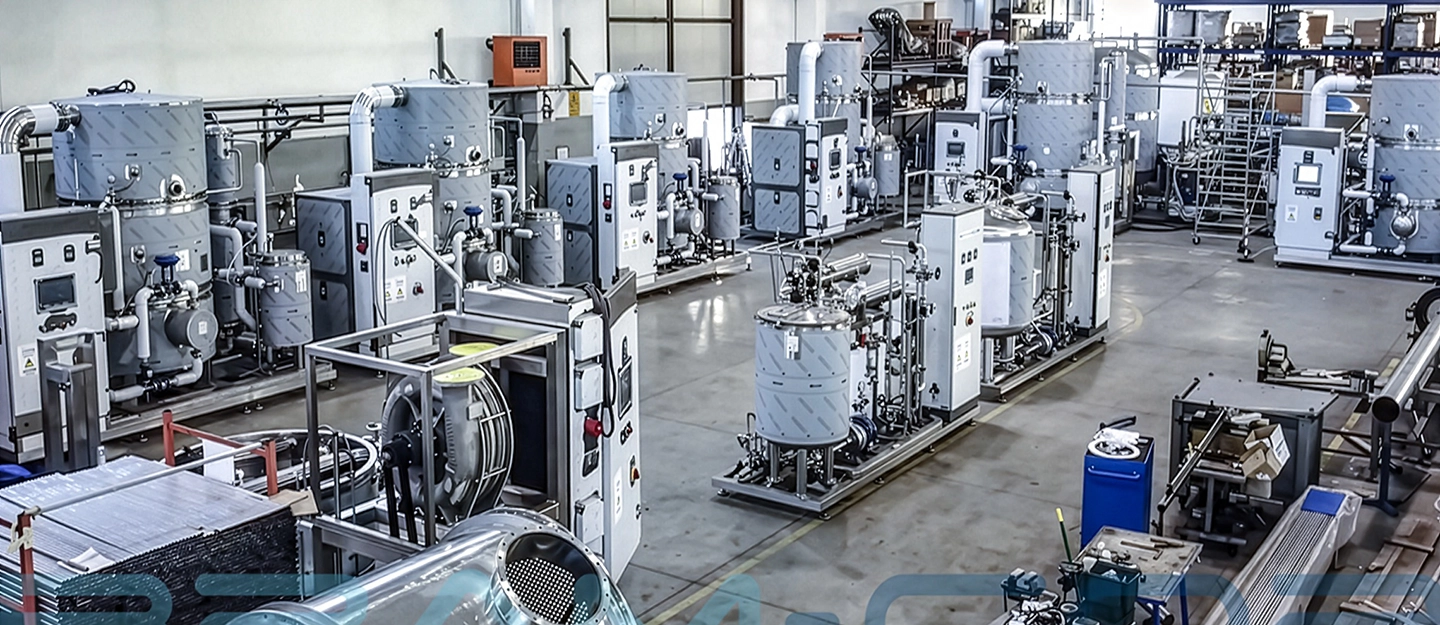
BRAM-COR Catalogue PDF viewer
The examples and photographs on this site come from projects and installations designed and built by Bram-Cor SpA (Parma, Italy), which edits the content through its technical department. Equipment catalogue.
Videos on WFI equipment and distillers


